Tuesday, November 13, 2012

Pinay Fashion Designer Joins List Of Self-Made Millionaires In The US


By MAUREEN MARIE BELMONTE  
November 13, 2012
With the help of her husband Ken, Josie was able to build the Natori name as a lifestyle brand, with an ‘East meets West’ aesthetic (Photo from Natori.com)
MANILA, Philippines – Turning her dreams to reality is US-based Filipino fashion designer Josie Natori who recently gained recognition as one of the seven biggest, self-made immigrant millionaires in the US.
Natori, in a feature accompanying the list created by finance publication Kiplinger on their official website, reiterated that seeing an immigrant status as a hurdle is a matter of perspective since it can also be an asset as in her case.
"Some people may see their immigrant status as an obstacle," she says. "I have always viewed it as one of my biggest assets. Natori is unique in the design world, because of its East-meets-West aesthetic. All of that is due to my background and heritage."
Others on Kiplinger's list are Jamaican Lowell Hawthorne, founder and CEO of Golden Krust Caribbean Bakery and Grill; Austrian Hollywood actor Arnold Schwarzenegger and; Indian Shama Kabani, founder and CEO of the Marketing Zen Group.
Also making it to the roster are Google co-founder and director of special projects, Russian Sergey Brin, and Salvadorans Carlos Castro, president and CEO of Todos Supermarket and Jose Wilfredo Flores, owner and founder of W Concrete.
Under the spotlight
Natori moved to the US in 1964 when she attended Manhattanville College in New York. She said that the first few months were the hardest as it the time she had to adjust and move past culture shock.
"The cold winters, the food and the sense of humor were just different. I was very homesick," she told Kiplinger. 
After earning an economics degree, she went to work for Bache & Company on Wall Street and moved to Merrill Lynch in 1971. But climbing the corporate ladder wasn't enough. "While I loved the [corporate] culture, I also had a very strong desire to build something myself," she said.
Born Josefina Almeda Cruz, Natori grew up in a family of entrepreneurs.
“My father (construction tycoon Felipe Cruz) is a self-made man and my grandmother was really like an entrepreneur. It’s in my blood. I knew that I would have my own business,” she related in a previous Manila Bulletin report.
Natori became a US citizen in 1974. But it was only after giving birth to her son in 1976 did she and husband, Ken, decide to look into putting up their own business. According to her, their business options ranged from the mundane to the grandiose: from furniture, baby clothes, to a carwash and even to running a McDonald’s franchise. However, it was by chance in 1977 when she showed the embroidered blouse to a buyer at Bloomingdale’s. That “accident” eventually led to her foray into high-end lingerie design and more.
Today she has nearly over 400 employees under The Natori Company. Her husband serves as chairman while her son Kenneth is vice-president of finance and e-commerce.
Kiplinger noted that in 2011, Natori teamed up with mass retailer Target for a budget-friendly line of lingerie and loungewear. That year, the company generated $150 million in retail sales, which landed her a spot on the list.
The 64-year-old fashion designer pointed out to aspiring immigrant entrepreneurs that "There is no better place in the world for an immigrant to succeed than in the U.S. Follow your dream and make it happen."


When in Cebu City, please visit http://www.gregmelep.com for your real estate and retirement needs. Avail of the opportunity to own a condominium unit in Cebu City together with your own parking space at the low amount of only P12,000.00+ and House and Lot @ P 7,306.81/month only. Hurry while supply of units still last. Just call the Tel. Nos. shown herein: (053)555-84-64/09164422611/09173373687.

Saturday, November 3, 2012

BEN CHAN TALKS ABOUT BENCH’S SUCCESS


‘We did things nobody dared to do’

By 


“Dapat … Whappak! (It should be … whappak),” exclaims the legendary screen villainess.  A dolled-up Bella Flores explains how to slap the opponent in the short film “Kontrabida 101 (Villainy 101).
A production of Benchingkofilms  and directed by Joey Reyes, “Kontrabida 101” is a cheeky discourse on the villain’s intimidation savvy, the  stare and the raised eyebrows that keep people trembling even if the villain is wearing sunglasses.
Flores’ monologue sounds like a metaphor for Bench’s mind-set amidst the competition.  The film thrives on the irony that an 84-year-old actress stars in a digitized medium.  Although Flores is a stranger to the millennial generation, no one in Philippine cinema has taken after her. Likewise, Bench underscores, albeit exaggeratedly, that the brand gets stronger over time.
Going global

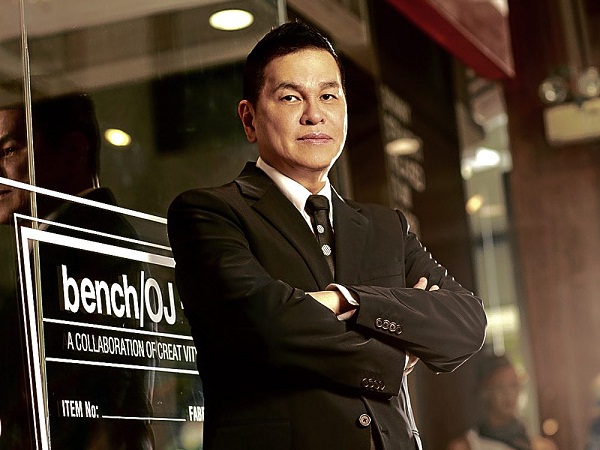
BENITO Chan
Indeed, if there is a local fashion brand that tells its story loudest, it has to be Bench. Since its inception in 1987, the brand has won awards in marketing, advertising and retailing.  Amid the 25th anniversary activities that were marked with pomp, glamour and camp, Bench merited with the Agora Awards for Export Marketing.  The Philippine Marketing Association recognized its operations in 62 branches overseas.
“We export not just products or raw materials, but a brand. The Bench brand stands for an entire vision and the Filipino lifestyle, specifically. This is a marketing feat, since it is one thing to sell to a domestic market, while it is a completely different ball game overseas, alongside the world’s biggest and best brands.  The winning strategy is to think, act, and look global, wherever you are,” explains Benito Chan, chair of Suyen Corporation, the mother company of Bench.
“We enter the foreign market by infusing a Filipino flavor to our designs but still making it adaptable globally. This has been one of our strengths which we will continue to build on in the future.”
Strategies differ in various countries, naturally. In the Middle East, it targets the Filipino population although it has been attracting more non-Filipinos to its stores.  On the other hand, Bench has become a direct competitor to major underwear brands in China since it entered the market 10 years ago.
Undoubtedly, Bench has created a credible match with the Hollywood and Korean endorsers. It has forged a bond with consumers and pumps up sales.
“To establish a true global brand, we are trying to create a Bench family of endorsers from local celebrities to international ones. A Hollywood endorser brings in a different flavor to the brand, as would a Korean. When you put together the entire stable of Bench endorsers, who are all from different backgrounds, ages, nationalities, styles, body types, it really paints a picture of a brand that embraces the world. It boosts the brand’s image because Bench clothes look good on all of them. There is universal appeal.”
Clearly, the tender ages of Adam Levine, Lucy Hale and Lee Min-Ho and their brisk casualness are expected to resonate with kids who live in jeans and t-shirts worldwide.
Trending
Aside from export marketing, Bench received an Agora Award for Entrepreneurship in 2000 for building itself as a “maverick” brand. The media has gushed over out-of-the box strategies and its verve in pushing boundaries.
“We did things nobody dared to do. That is what the word ‘entrepreneurship’ connotes—making initiatives and taking risks,’” declares Chan.

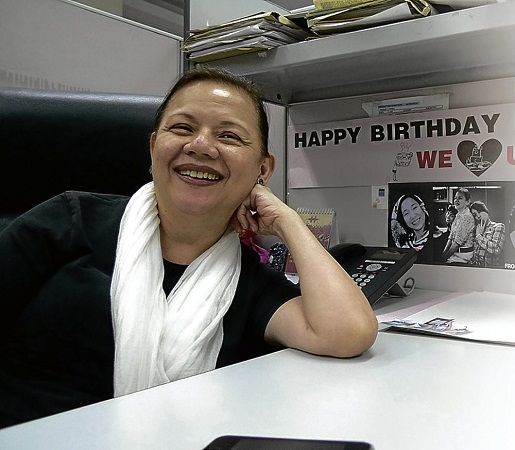
GINA Yupangco
“You have to know the right time to launch or sell it. Timing is the key, and that is the beauty of it, because you can never be complacent, and you are always learning no matter how experienced you are or how much you have already achieved. ”
One of Bench’s biggest stunts was putting excitement in the underwear and making a private item very public. Its biannual underwear fashion show not only drove more sales but also catapulted the brand’s image.
“Through the show, it is easier for us to market our brand in the international scene.  Just recently, Fox International covered the Bench Universe 2012 underwear show and made a special which will air in Star World this December. This will definitely help in strengthening the brand equity in the Asian region,” says Chan.
Unknown to the public, Bench has also been producing merchandise that has social relevance. To create awareness on the preservation of endangered species in Calauit sanctuary, Bench came out with a safari collection. Four years ago, it supported the I am Ninoy campaign by printing Ninoy Aquino t-shirts, the proceeds of which went to charity.
Kris Aquino partnered with Bench for the Freedom cologne to commemorate 25th anniversary of People Power. Part of the sales went to Aquino’s charity for classroom building
Bench has always been an early adaptor even in green trends. Two years ago, it initiated the Green Wednesdays in which customers are encouraged to use their shopping bags. It’s arguably the first local brand to use bamboo fiber in its line called Envi (short for Environment).
“We wish to raise awareness on bamboo fiber, since bamboo is a very sustainable resource. It is much more sustainable to grow and harvest than cotton, using less water and energy, and as a fabric it is softer, more durable and comfortable,” says Chan.
To cater to the savvy millennial consumer, Bench has embraced ways of creating dialogue through social media. Chan is amazed at the quick reactions from Twitter.
“Customers tweet me and I can respond immediately. For example, we used to ban picture-taking inside the store. Now, with Twitter, we encourage it. A customer can take a picture of anything they find interesting in our merchandise and then a few minutes later it is ‘trending.’ Or, they can Tweet me directly if they have comments or suggestions. This is very empowering for a customer—the ability to directly communicate with the chairman of the company and to feel that they have been acknowledged. It  is empowering for me too— because I can stay focused on the bigger picture without losing sight of the details that can make or break a customer’s experience,” says Chan.
Enduring family ties
Although Chan has been the front liner, he credits the success to the family which runs Suyen Corporation. His sister Nenita, vice president of finance, keeps a sharp eye on the cash flow. Her husband, Virgilio Lim, Suyen president, is a math whiz and   management savvy.  The family dynamics is described as synergistic with constant check and balance.
“Nenita and I know the ins and outs of business just from watching our parents run Liwayway cornstarch—from instinct and learning by osmosis.  The next generation is different.  They now have business degrees and are more scientific about it. Nenita and Virgilio’s eldest son Bryan, my nephew and godson, got his MBA from AIM and is thriving in the Business Development department of Suyen. He is in charge of our expansion, including brand acquisition. Their two daughters, Kristine and Suyen, are in charge of Brand Management. Each one got a degree in fashion merchandising, one from New York and the other from London. They maintain the standards in terms of product quality and merchandising,” he says.
Chan adds that the culture of family has extended to the employees, suppliers and endorsers. Some long-term relationships began with Chan’s eye for spotting talent.
He discovered Richard Gomez’s photograph in Jun de Leon’s studio in 1987. It has been arguably the longest celebrity-brand alliance. Although likes of Richard Gutierrez have a natural fit with Bench’s market today, Gomez’s enduring presence embodies the company’s values of loyalty, friendship and stability.
In the early ’90s, Chan was impressed with the Italian look of designer Gina Yupangco during a fashion show at the Manila Polo Club. He then tapped her for Herbench.  “She was like a fixture at the office that had a very unique and interesting way of dressing up.  She gave that personal touch to HerBench,” recalls Chan.
When she died of a lingering illness, Chan acknowledged that she was a tough act to follow.
As of this writing, Chan is traveling through Israel and Jordan. Living on a suitcase, he travels five months in a year.

Saturday, September 29, 2012

Firm produces coconut sugar


Wednesday, September 26, 2012
THE coconut business is not all about copra. Benjamin Lao proved this when he produced coconut sugar, coconut syrup, cacao with coconut sugar, ginger brew or salabat, sweet and spicy seasoning and many others.
Lao’s business started when he inherited five hectares of land in Barangay Eman, Bansalan, Davao del Sur from his parents. He said he realized then that not only did he inherit land, he also inherited his parents’ passion for farming. While Lao worked in government, he spent his weekends developing the farm two hours away from Davao City where he works.
At first the coconut farm only yielded 300 to 400 coconuts per quarter. After extensively researching on farming he learned that planting nitrogen-fixing legumes is a good form of fertilizer. His coconut harvest improved to 15,000 nuts per quarter.
Lao, the 2005 awardee for most outstanding farmer in Davao del Sur, then launched the Lao Integrated Farms Inc. that also ventured in goat and hog raising.
This also marked an increase in the production of coconut-based products, particularly the sweetener under the product name Donnabelle.
He said coconut sugar and syrup are more tolerable for people with diabetes.
While Lao’s market is largely based in Davao, the coconut products are slowly making their way to Cebu particularly in stores catering to health-conscious individuals. The products are available in Oats and Berries at Robinson’s Cybergate, Tindahang Pinoy, Wellnessland, Librando BioMedical Clinic, SugarFree Haven, BHMC, Pardis Chiropractic Clinic at Ayala Center Cebu, Hmart, Fair Trade, Fooda Saver’s Mart.
The products will also be available in selected pharmacies in Cebu.
Last April, Lao opened his satellite office on F. Llamas St., Cebu City, managed by Lilah Marie Gatchalian, in connection with its goal of expanding in the area through more dealership. (PR)
Published in the Sun.Star Cebu newspaper on September 27, 2012.

Tuesday, August 14, 2012

ELEMENTS ECO EFFICIENT RESIDENCES - Shaw Boulevard, Pasig City

ELEMENTS ECO EFFICIENT RESIDENCES - Shaw Boulevard, Pasig City

Build My Own Website


Make a website for free www.simplesite.com Build a website in 3 minutes with a personal domain. Try now for Free!
Expert Author Kim Osabi
It's not as hard as it might seem to build your own website. You don't need to spend a fortune to employ a web designer.You don't need to understand HTML (computer code) That's the greatest most exciting thing!! You reallycan build a website with very little money and a few basic skills that anyone can quickly learn. If you can point a cursor and click you are half way there!
Ok, I got a little carried away there, as I said there are things to learn, and you have to be willing to ride the learning curve, but don't panic- it is a short,gentle learning curve.When I started online I didn't have a clue how to create a website, but I can truthfully say that, now, it holds no fears for me. The funny thing is that, although I have had problems, really frustrating moments when I felt like giving up, it was well worth it when I got my first website published and live online. WOW, what a feeling of achievement! A fantastic buzz!!
Choose a Domain Name
The first thing to do is decide on a Domain Name. This is the name you choose for your site and that will appear on the search engine results. Obviously you will want a domain name that is related to your web content.You will need to search online for a Domain Name Registrar, check if your chosen name is available and register it.This will cost you about $10 for 12 months. It's a simple process. Try to get one that ends in.com if possible.
Web Hosting
The next thing to do is to get your domain hosted (housed) online. There are thousands of hosting companies online, but I suggest that you have a look at just the first page, or two, of Google otherwise you waste a lot of time. It is important to find a web hosting company that gives you free add-on domains in the package, so that you can register any new web site domains FREE.
Once you have set up your web hosting you will be able to build your web pages and upload them to your host.
Free Tools
There are a few tools you will need to make your own website, but they are all free.
Web Templates
A web template is a pre-designed webpage without content or images. Web templates eliminate the need for a professional webpage designer.You can choose from a huge choice of basic free web templates online, download and save them on your PC.
An HTML Editor
An HTML editor is software that converts text and images into HTML (computer code or language) and vice versa.This enables you to add content, i.e. text and images to your web template.
You can pay hundreds of dollars for HTML editing software such as "Dreamweaver" or "firstpage" but in my experience these excellent editors have a very steep learning curve and unless you are planning a career in web design, take too long to master. I use a great HTML editor called "Kompozer" It's FREE to download, easy to use, and more than adequate for creating professional looking web pages.
An FTP Client
In order to upload your web page(s) to the web you need to use an FTP client. This is basically software that transfers your web files (web pages) from your computer to your hosting site online. I use "Filezilla" which is probably the most popular. Filezilla is FREE to download to your PC, and is very easy to use.
What Now?
Well although I have explained what you need to create your own website you are probably thinking "but exactly how do I do this?" and that it the problem that most people face when they want to build their own web sites.There seems to be very little help available and no one willing to share their knowledge with newcomers. It's almost as if this is a closely guarded secret and if you want that knowledge you will have to pay a premium for it...
DON'T PAY ANYTHING!!
For a free step-by-step guide to creating your own website Please click the link below:
Kim Osabi has been a full time internet marketer for just over 2 years, starting as a complete novice he has, with help from a good friend, built his own websites and is slowly building a successful career in internet marketing.To find out more go to: http://www.kimandchris-online.com

Wednesday, August 1, 2012

May the cloth be with you’: Why these enlightened moms are choosing cloth over disposable nappies


It’s practical, economical–plus, these young mothers want to change the world, one diaper at a time not just for the environment, but for their babies’ health and safety

By: 


 466 408

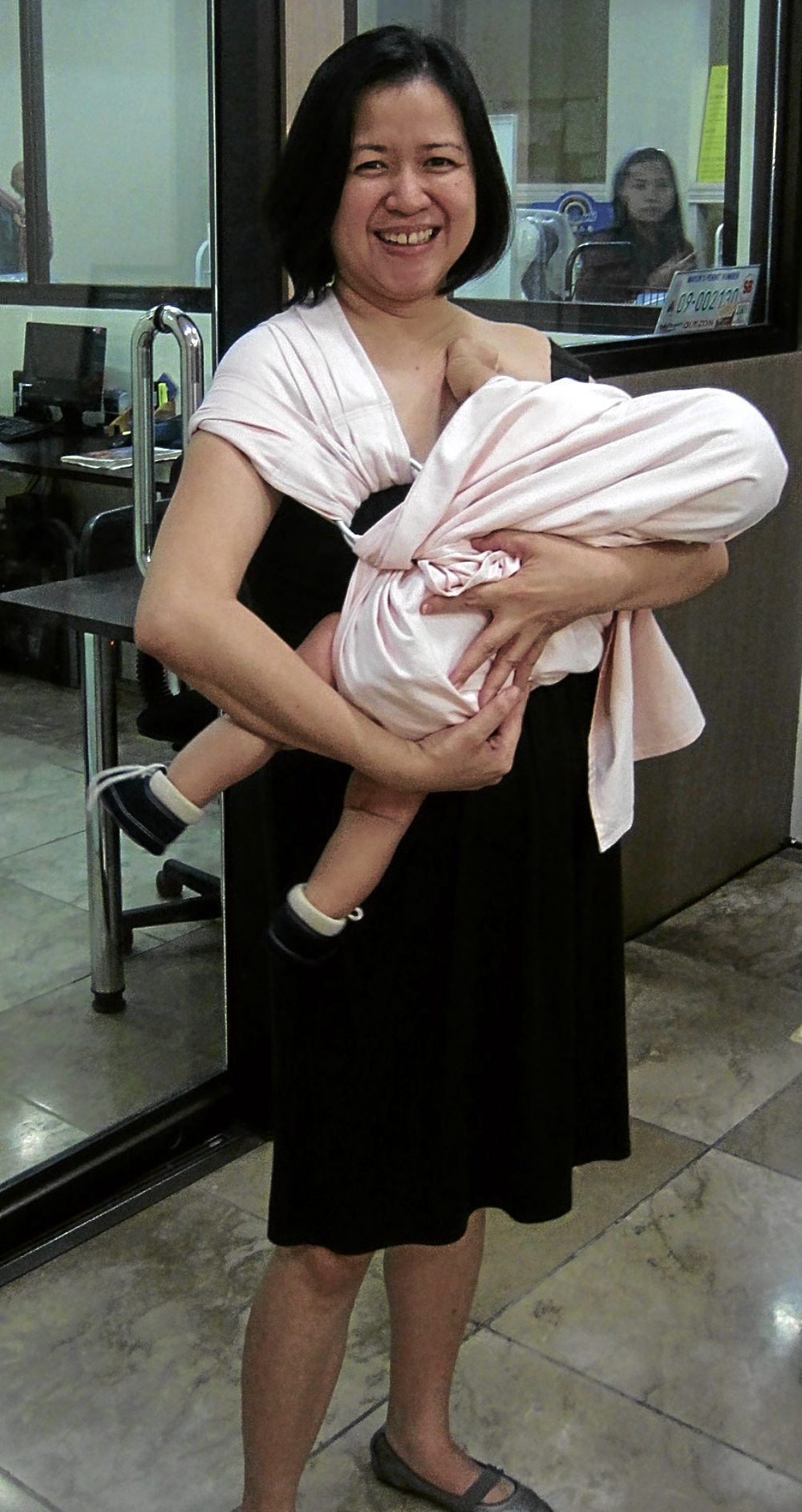
Baby inside Jen Tan’s sling.
This grandmother feels the world will be all right if left in the hands of this new batch of mothers who, with such ease, use terms like “attachment parenting,” “baby wearing,” “baby-led weaning,” “communication on elimination” (that’s watching for baby’s cues for readiness for potty training).

More than that, they have found ways to make time-tested, natural ways of parenting compatible with their busy, urban lives.

My own daughter Kimi got me curious after she phased out her baby’s old-fashioned cloth and disposable diapers to make way for modern cloth diapers. Grandchild Kai has adjusted to them and looks doubly cute in her tushi wushies (a brand of modern cloth diaper, but it has almost become a generic word for them).

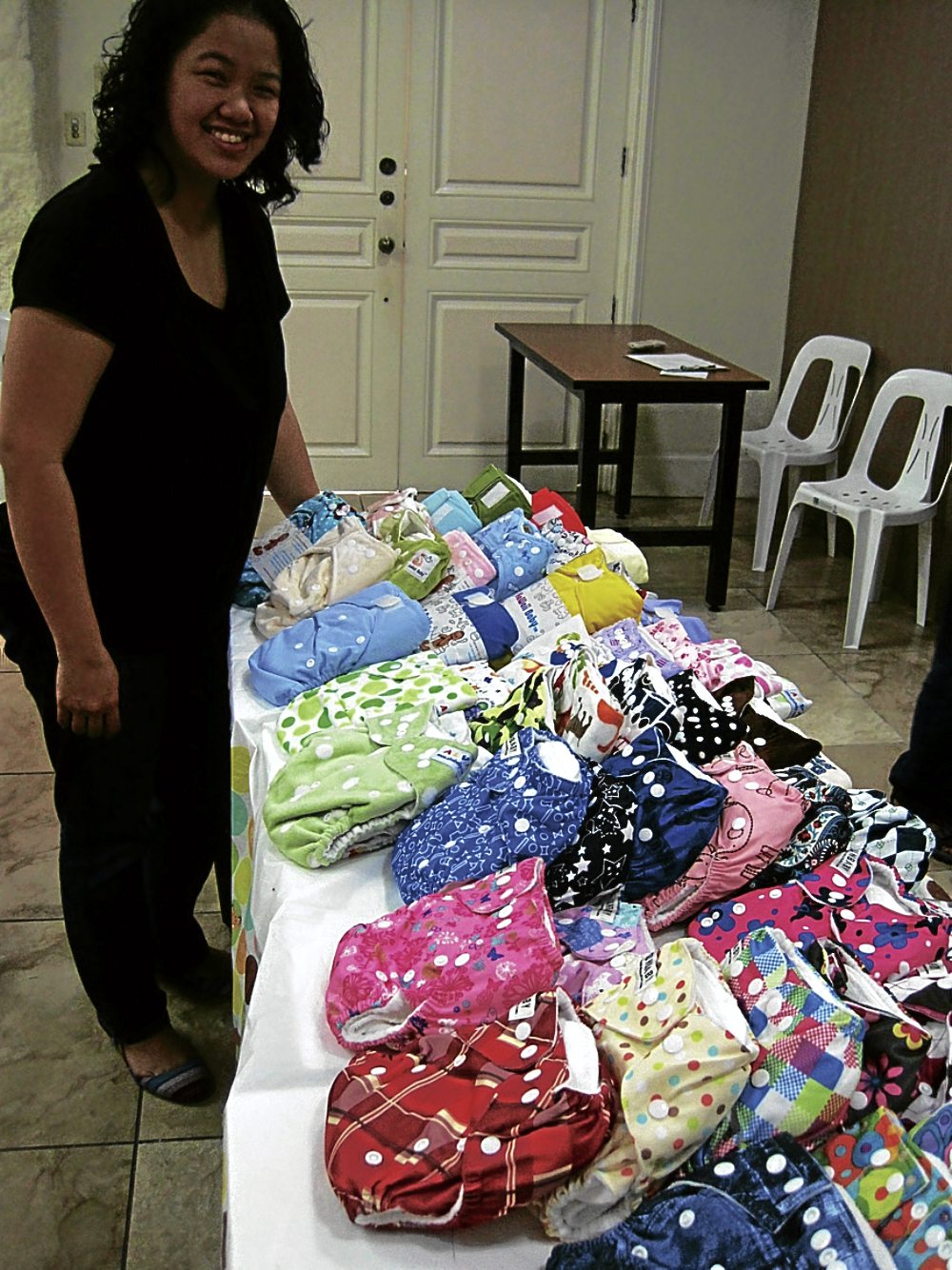
SATISFIED mom-preneur sells modern cloth diapers.

Every so often, Kimi would receive “fluff packages” containing her latest orders of cloth diapers. She shops and pays online, does “group buys” to bring down the unit cost, and is part of a Facebook group that shares experiences in washing and drying diapers made of cloth from natural materials.

By her lonesome, she has become a tushi proselytizer, turning her cousins into happy converts. They send each other Instagram photos of their babies in the latest diaper print.

Using their language, it was time this lola “eyeballed” the women behind this natural parenting movement to find out how it got started and how it is helping save the environment in a big way.

Jen CC Tan is acknowledged for leading the way in creating baby slings and introducing modern cloth diapers. Her business card describes her as an “über mom,” apart from being president of Next 9 that is out to reinvent motherhood through the production of fashion slings, baby covers and innovative cloth diapers.

Twelve years ago, she read up on Dr. William Sears, “who made sense to me,” she said, “because his ideas on attachment parenting sought to make the child confident while he or she is still small by carrying them, attending to their needs and wants which are the same.”


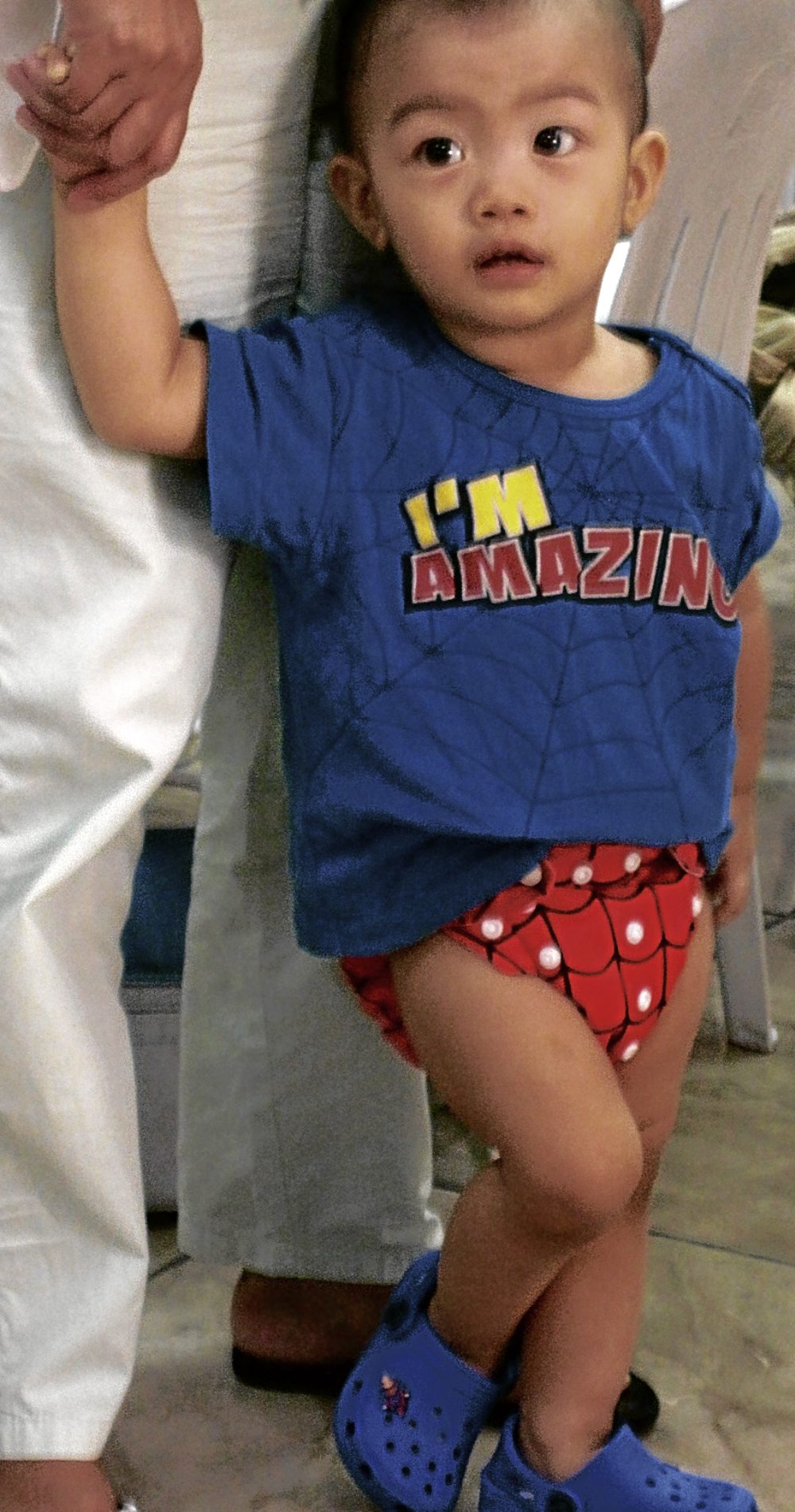
Toddler in an up-to-date “Spider-Man” cloth diaper.
Jenny Ong, a lawyer whose blog www.chroniclesofanursingmom.com takes on milk companies who are going around the law promoting breast-feeding, said old folks believe that a young child cries and cries if he/she is “spoiled” by always being carried by the mother.

Carried and comforted

She disputed this, explaining that “a child can’t differentiate between want and need yet, is not capable of manipulating an adult. When they cry, they want to be carried and comforted by the mom.”

Wearing a baby through a sling rather than carrying the baby in one’s arms worked for her. Her hands were free to do other things.

Tan bought her first sling, an American brand, from Singapore, so the material was warm. She copied the design, using cotton. When she’d attend meetings of breast-feeding moms, they’d ask where she got the sling. She made a few extra ones for them until it hit her that there was a market for it.


Baby sling on Abie Co Floreza doubles as cover for breast-feeding.
She sources the rings from abroad so as not to be embroiled in safety issues. The cloth she buys from Divisoria, and has a modista sew them for her. A sling can carry a child of up to two years old or 30 pounds. Her goal is to source local weavers for these slings as a way of keeping the weaving industry alive.

She also used flat-folded cloth (bird’s eye or gauze) diapers on her two sons until four years ago, when she discovered in magazines that contoured diapers with waterproof outer layers were available. At that time, the prices were prohibitive at P1,000  each because they were all imported from the US.

She found better and cheaper ones at an expo in China, then decided to make her own line. Tan recalled, “The ones I first made were of Velcro, in small, medium and large. Pinoys are frugal, so they preferred to buy the medium in big amounts because the size fits most babies. With the snaps, one can adjust the diaper from newborn size up to 30 pounds.”

She thought how cute these diapers looked and made them available locally by establishing an online presence through FB and friends who blog. (Her company’s site is www.next9.org.) The diapers are also at Brock and Mortar stores, Babyland, Infanticipation at Festival Mall in Alabang, Mamaway at Greenhills Town Center in Ortigas Ave., and Kuku Duckbill at Market! Market! in Taguig City.

She said the waterproof textiles of these cloth diapers are safe, manmade synthetics and environment-friendly. The liners/inserts are made of organic fabrics like cotton, bamboo, charcoal, fleece, hemp, microfiber, suede, linen.


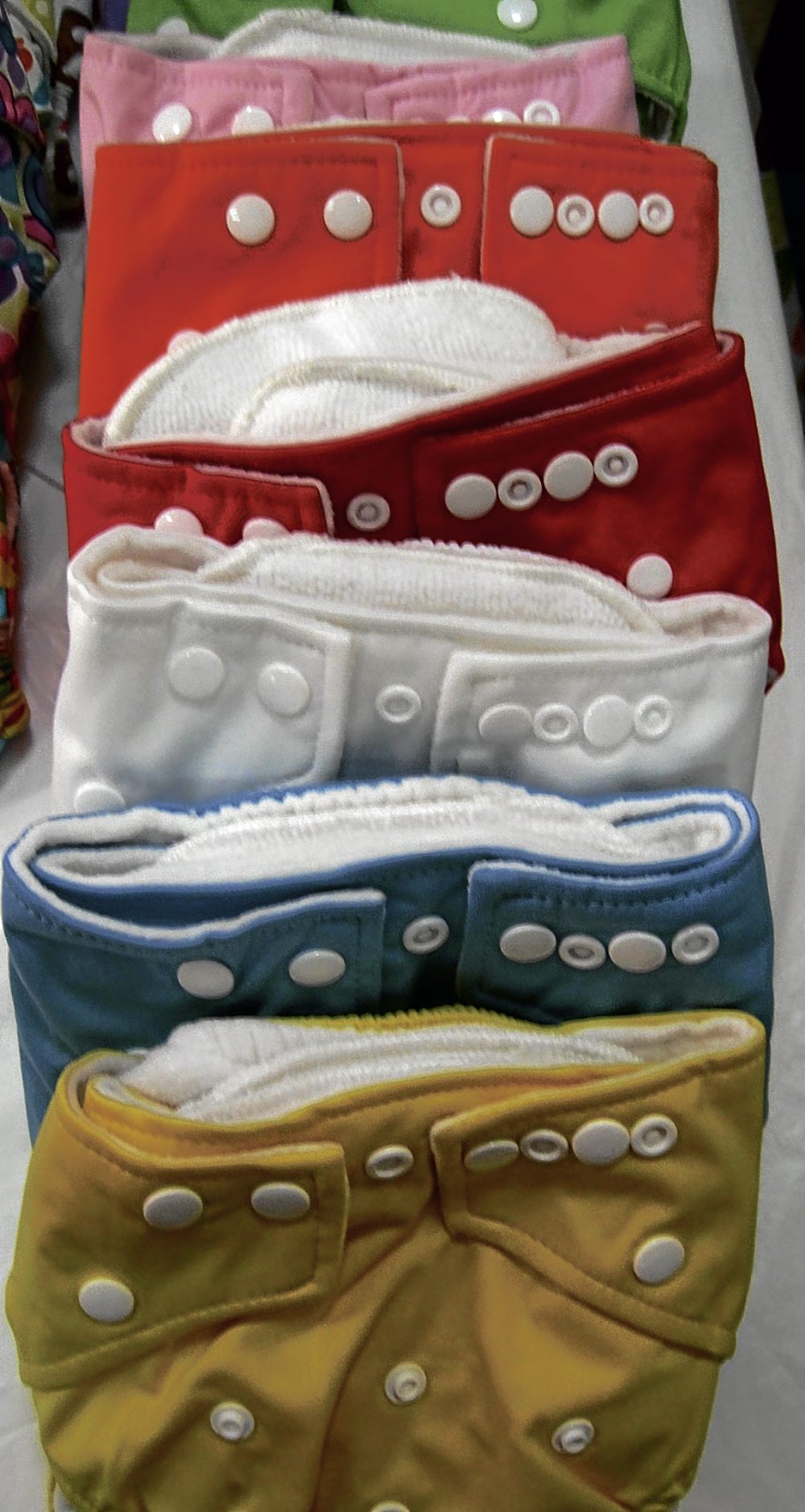
Modern cloth diapers in solid colors. PHOTOS BY ELIZABETH LOLARGA
At their seminar “Cloth Diapering 101” at the Medela House in New Manila, Quezon City, some mothers testified how they’ve been “100-percent cloth diapering their babies day and night.” It can even be done on out-of-town trips or family vacations, despite the added chore of washing and drying the diapers under the sun.

The savings are big. The variety of prints makes buying cloth diapers fun (almost addicting, in the case of Kimi Fernandez), and there’s the assurance of nothing toxic in them, especially for babies with sensitive skin. The diapers today not only come in plain or solid colors, but also in prints of rockets, butterflies, bears, alphabets, flowers and more.

Consumers have not been adequately warned that disposable diapers contain carcinogenic by-products like plastic, dioxin or a gel-like substance that expands and absorbs wetness also found in tampons but have been proven toxic. Then there are allergy triggers like fragrances.

Abie Co-Floreza, a partner of a cloth diaper online store called Tickled Moms, said, “We have to limit the toxic pollutants that reach our babies because the environment is polluted enough.”

Doing the math


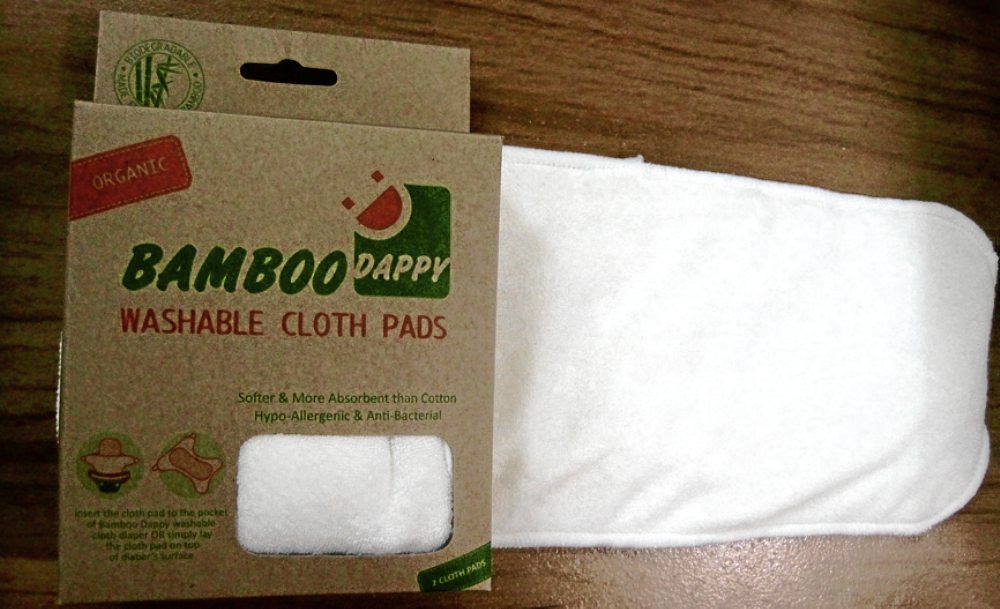
CLOTH inserts or pads that go inside the outer wet-proof panties
Tan and her co-mothers have done their math. If a mother buys a high-end disposable diaper or “dryper” at P8.50 each, she can spend up to P24,820 a year. A mom like Kimi, who lives in rainy Baguio, can claim exclusive cloth diaper usage at 24 pieces for baby Kai and does laundry every other day.

She said one must consider from six to eight nappy changes a day. She has invested P6,000 on these cloth diapers, one fourth the amount that could be spent yearly on disposable diapers. She is also assured that these diapers will last Kai until she is potty trained because “it’s one size fits most.”

Clarice Aviñante said it’s not enough to make the switch. The mother should learn how to “prep” a cloth diaper, depending on the material it’s made of. The waterproof outer layer needs one washing in cold water, then it’s ready for use.

Liners of bamboo cloth need washing in cold water of seven to nine times before they reach maximum absorbency.

She taught a “cheat” technique: wash the liners once, and have the baby wear it for shorter periods until the nappy hits its maximum absorbency.

The mom must ensure a snug fit by adjusting the waist and hip snaps to accommodate the baby’s leg and waist sizes. If the inserts are too long, they can be folded. Snugness means no spaces on the legs or back that can cause the urine to leak.

Change the diaper every two to three hours the way one does with disposables. Both outer cover and liner must be changed for hygiene purposes.

When to do laundry? Aviñante shared this formula: the number of diapers you need to have equals the diapers baby needs a day multiplied with the days when you plan to go between washes plus one.

If a baby uses up 12 diapers a day and you wash every other day, you’ll need a total of 36 cloth diapers.

In choosing a detergent for cloth diapers, ensure that it has no brighteners, no dyes, no fragrance, no softeners and no chlorine bleach. Separate covers or pockets from the soakers (inserts or liners). Put just one half of the usual amount of detergent. Rinse the diapers in cold water. Do it twice to ensure no detergent suds are left. Line dry horizontally so the elastics of the cover pants are not ruined.

Choosing cloth diapers needs determination. Aviñante said there are five pointers to make the choice work:

  • Change your mind-set. Do not try to do it. DO IT.

  • Invest.

  • Do not buy disposable diapers.

  • Educate people around you—your spouse, your parents, your yaya, your siblings.

  • Deal with stressors one at a time. Mothers find themselves in stressful situations from the time she gives birth to caring for the newborn, breast-feeding, undergoing postpartum depression.

Modern cloth diapers remain the wiser choice, these women were one in saying.  “Drypers” or disposables leave behind a huge carbon footprint when manufacturing, packaging, delivery to grocery shelves, marketing and sales are considered. These disposables also take from 100 to 500 years to decompose.