Thursday, August 16, 2012


Tuesday, August 14, 2012
Build My Own Website
Make a website for free www.simplesite.com Build a website in 3 minutes with a personal domain. Try now for Free!

It's not as hard as it might seem to build your own website. You don't need to spend a fortune to employ a web designer.You don't need to understand HTML (computer code) That's the greatest most exciting thing!! You reallycan build a website with very little money and a few basic skills that anyone can quickly learn. If you can point a cursor and click you are half way there!
Ok, I got a little carried away there, as I said there are things to learn, and you have to be willing to ride the learning curve, but don't panic- it is a short,gentle learning curve.When I started online I didn't have a clue how to create a website, but I can truthfully say that, now, it holds no fears for me. The funny thing is that, although I have had problems, really frustrating moments when I felt like giving up, it was well worth it when I got my first website published and live online. WOW, what a feeling of achievement! A fantastic buzz!!
Choose a Domain Name
The first thing to do is decide on a Domain Name. This is the name you choose for your site and that will appear on the search engine results. Obviously you will want a domain name that is related to your web content.You will need to search online for a Domain Name Registrar, check if your chosen name is available and register it.This will cost you about $10 for 12 months. It's a simple process. Try to get one that ends in.com if possible.
Web Hosting
The next thing to do is to get your domain hosted (housed) online. There are thousands of hosting companies online, but I suggest that you have a look at just the first page, or two, of Google otherwise you waste a lot of time. It is important to find a web hosting company that gives you free add-on domains in the package, so that you can register any new web site domains FREE.
Once you have set up your web hosting you will be able to build your web pages and upload them to your host.
Free Tools
There are a few tools you will need to make your own website, but they are all free.
Web Templates
A web template is a pre-designed webpage without content or images. Web templates eliminate the need for a professional webpage designer.You can choose from a huge choice of basic free web templates online, download and save them on your PC.
An HTML Editor
An HTML editor is software that converts text and images into HTML (computer code or language) and vice versa.This enables you to add content, i.e. text and images to your web template.
You can pay hundreds of dollars for HTML editing software such as "Dreamweaver" or "firstpage" but in my experience these excellent editors have a very steep learning curve and unless you are planning a career in web design, take too long to master. I use a great HTML editor called "Kompozer" It's FREE to download, easy to use, and more than adequate for creating professional looking web pages.
An FTP Client
In order to upload your web page(s) to the web you need to use an FTP client. This is basically software that transfers your web files (web pages) from your computer to your hosting site online. I use "Filezilla" which is probably the most popular. Filezilla is FREE to download to your PC, and is very easy to use.
What Now?
Well although I have explained what you need to create your own website you are probably thinking "but exactly how do I do this?" and that it the problem that most people face when they want to build their own web sites.There seems to be very little help available and no one willing to share their knowledge with newcomers. It's almost as if this is a closely guarded secret and if you want that knowledge you will have to pay a premium for it...
DON'T PAY ANYTHING!!
For a free step-by-step guide to creating your own website Please click the link below:
Kim Osabi has been a full time internet marketer for just over 2 years, starting as a complete novice he has, with help from a good friend, built his own websites and is slowly building a successful career in internet marketing.To find out more go to: http://www.kimandchris-online.com
Article Source: http://EzineArticles.com/?expert=Kim_Osabi
Wednesday, August 1, 2012
May the cloth be with you’: Why these enlightened moms are choosing cloth over disposable nappies
‘
It’s practical, economical–plus, these young mothers want to change the world, one diaper at a time not just for the environment, but for their babies’ health and safety
By: Elizabeth LolargaPhilippine Daily Inquirer

Baby inside Jen Tan’s sling.
This grandmother feels the world will be all right if left in the hands of this new batch of mothers who, with such ease, use terms like “attachment parenting,” “baby wearing,” “baby-led weaning,” “communication on elimination” (that’s watching for baby’s cues for readiness for potty training).
More than that, they have found ways to make time-tested, natural ways of parenting compatible with their busy, urban lives.
My own daughter Kimi got me curious after she phased out her baby’s old-fashioned cloth and disposable diapers to make way for modern cloth diapers. Grandchild Kai has adjusted to them and looks doubly cute in her tushi wushies (a brand of modern cloth diaper, but it has almost become a generic word for them).
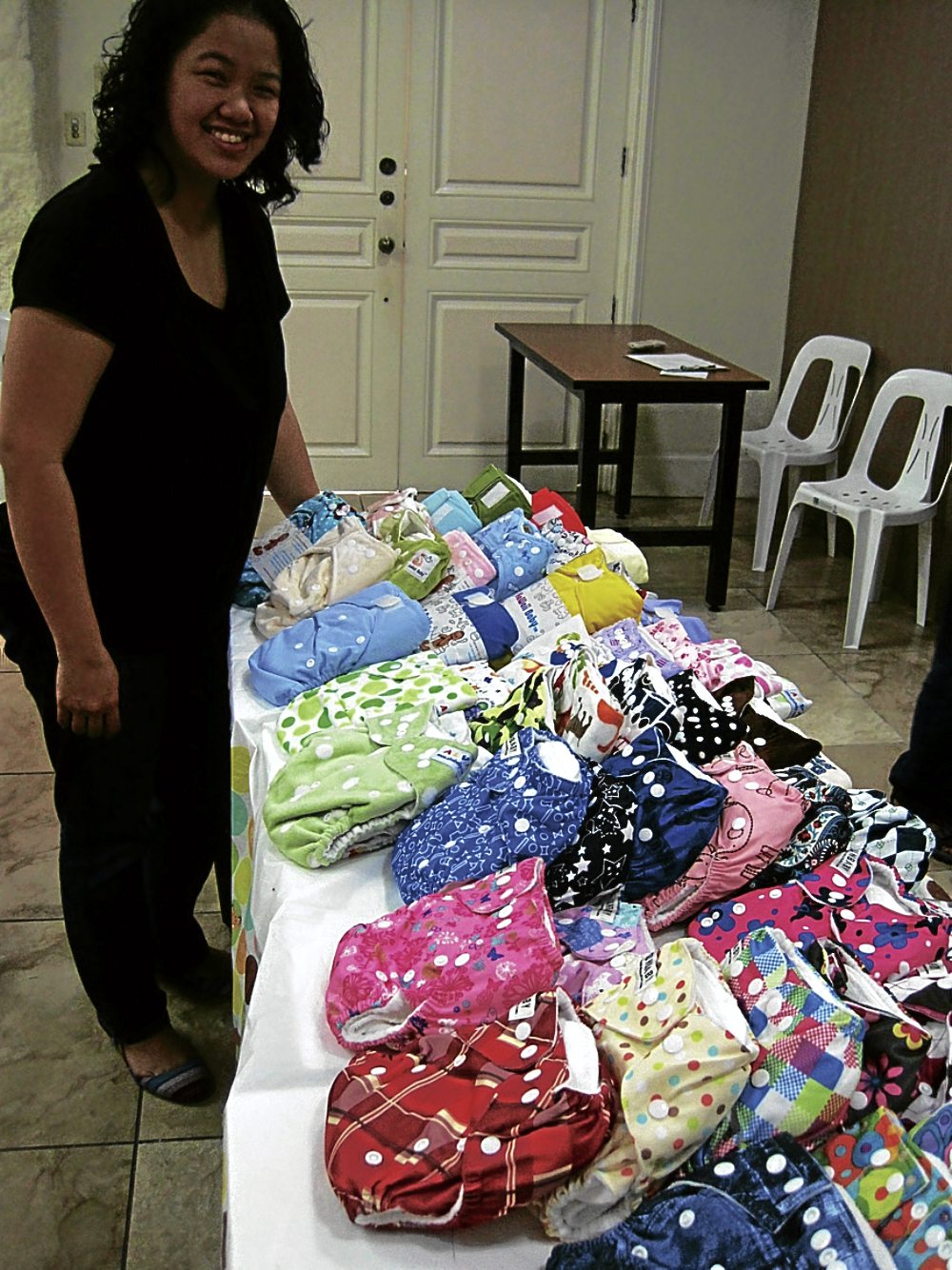
SATISFIED mom-preneur sells modern cloth diapers.
Every so often, Kimi would receive “fluff packages” containing her latest orders of cloth diapers. She shops and pays online, does “group buys” to bring down the unit cost, and is part of a Facebook group that shares experiences in washing and drying diapers made of cloth from natural materials.
By her lonesome, she has become a tushi proselytizer, turning her cousins into happy converts. They send each other Instagram photos of their babies in the latest diaper print.
Using their language, it was time this lola “eyeballed” the women behind this natural parenting movement to find out how it got started and how it is helping save the environment in a big way.
Jen CC Tan is acknowledged for leading the way in creating baby slings and introducing modern cloth diapers. Her business card describes her as an “über mom,” apart from being president of Next 9 that is out to reinvent motherhood through the production of fashion slings, baby covers and innovative cloth diapers.
Twelve years ago, she read up on Dr. William Sears, “who made sense to me,” she said, “because his ideas on attachment parenting sought to make the child confident while he or she is still small by carrying them, attending to their needs and wants which are the same.”
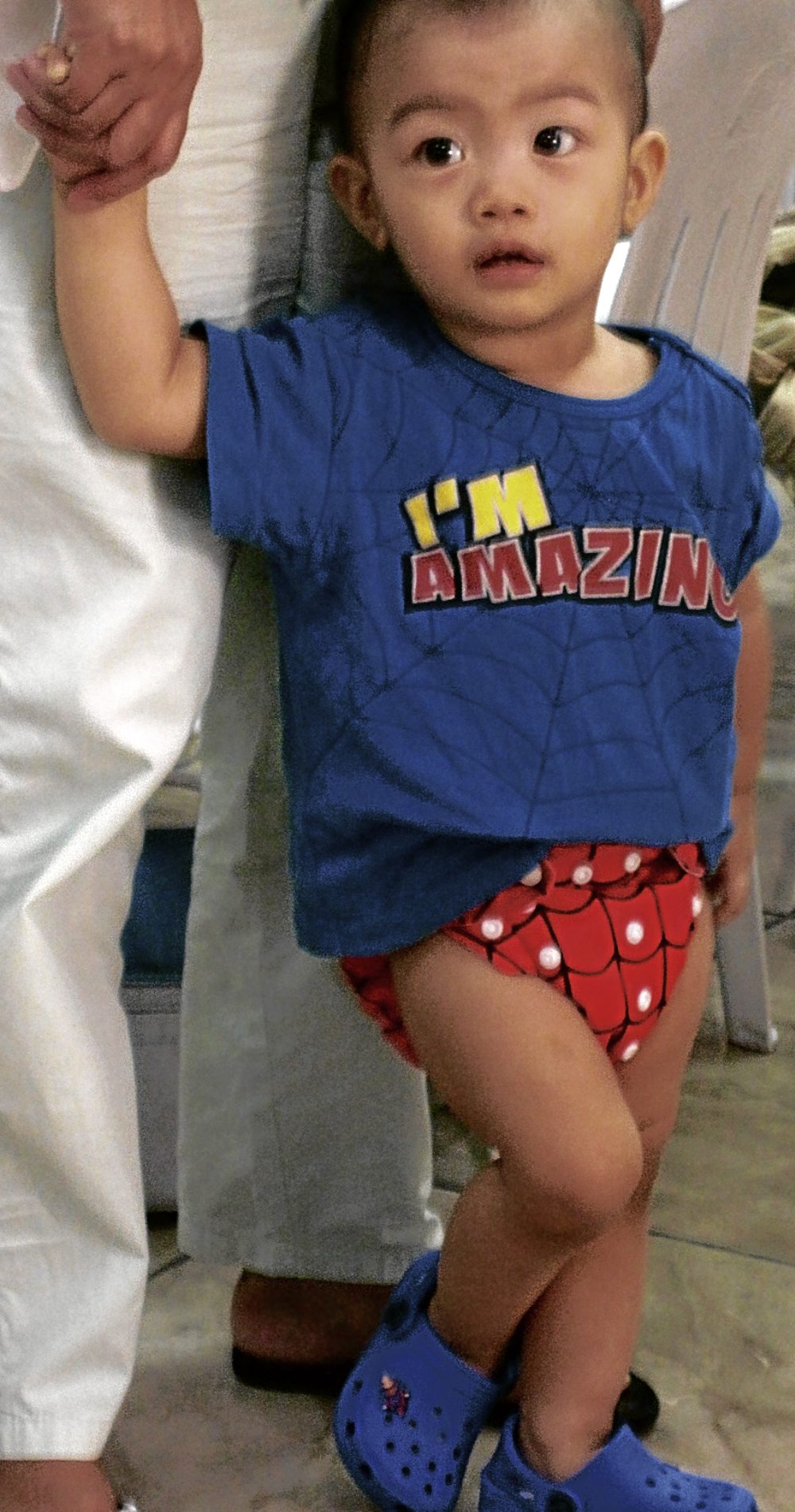
Toddler in an up-to-date “Spider-Man” cloth diaper.
Jenny Ong, a lawyer whose blog www.chroniclesofanursingmom.com takes on milk companies who are going around the law promoting breast-feeding, said old folks believe that a young child cries and cries if he/she is “spoiled” by always being carried by the mother.
Carried and comforted
She disputed this, explaining that “a child can’t differentiate between want and need yet, is not capable of manipulating an adult. When they cry, they want to be carried and comforted by the mom.”
Wearing a baby through a sling rather than carrying the baby in one’s arms worked for her. Her hands were free to do other things.
Tan bought her first sling, an American brand, from Singapore, so the material was warm. She copied the design, using cotton. When she’d attend meetings of breast-feeding moms, they’d ask where she got the sling. She made a few extra ones for them until it hit her that there was a market for it.
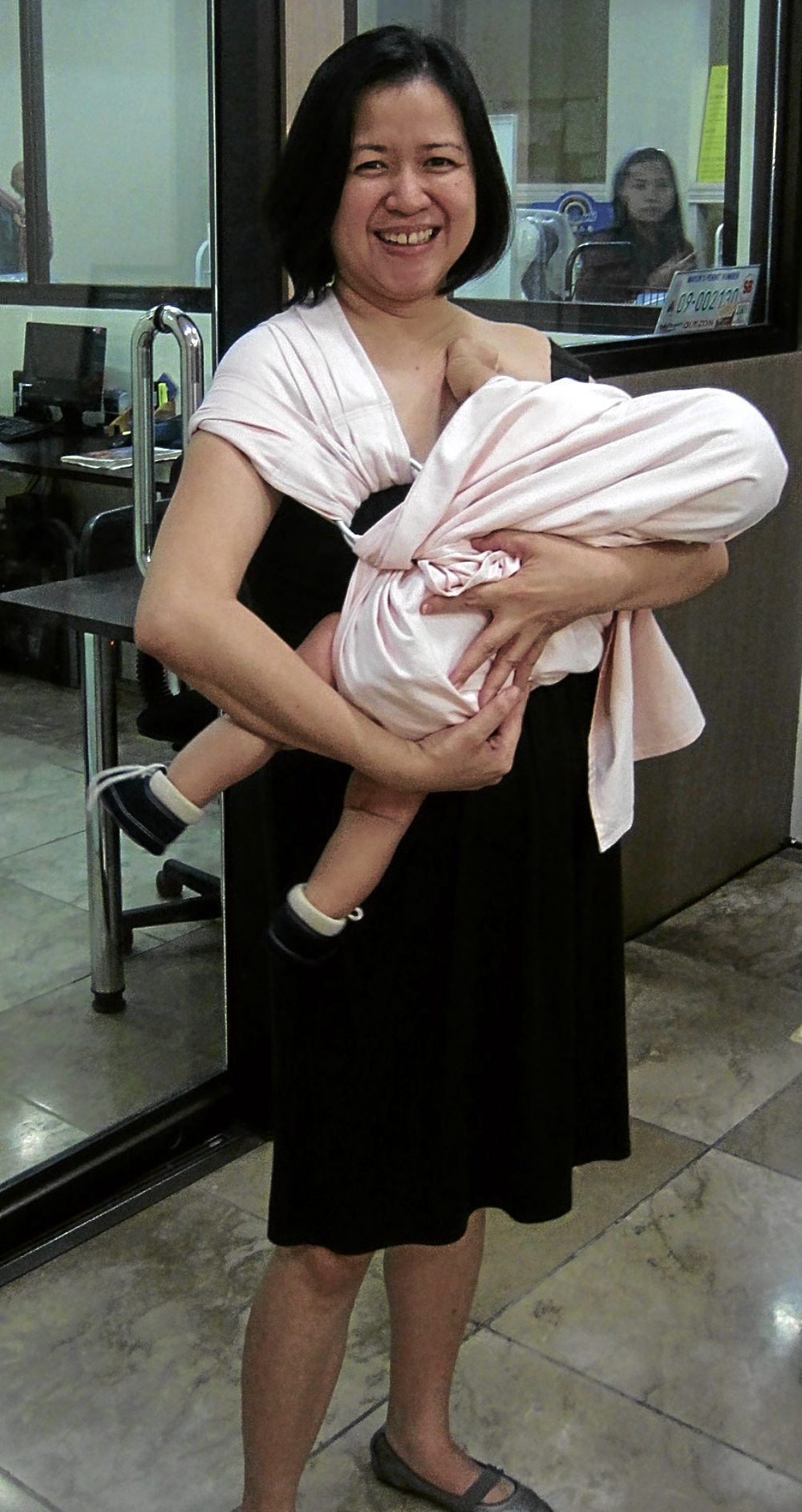
Baby sling on Abie Co Floreza doubles as cover for breast-feeding.
She sources the rings from abroad so as not to be embroiled in safety issues. The cloth she buys from Divisoria, and has a modista sew them for her. A sling can carry a child of up to two years old or 30 pounds. Her goal is to source local weavers for these slings as a way of keeping the weaving industry alive.
She also used flat-folded cloth (bird’s eye or gauze) diapers on her two sons until four years ago, when she discovered in magazines that contoured diapers with waterproof outer layers were available. At that time, the prices were prohibitive at P1,000 each because they were all imported from the US.
She found better and cheaper ones at an expo in China, then decided to make her own line. Tan recalled, “The ones I first made were of Velcro, in small, medium and large. Pinoys are frugal, so they preferred to buy the medium in big amounts because the size fits most babies. With the snaps, one can adjust the diaper from newborn size up to 30 pounds.”
She thought how cute these diapers looked and made them available locally by establishing an online presence through FB and friends who blog. (Her company’s site is www.next9.org.) The diapers are also at Brock and Mortar stores, Babyland, Infanticipation at Festival Mall in Alabang, Mamaway at Greenhills Town Center in Ortigas Ave., and Kuku Duckbill at Market! Market! in Taguig City.
She said the waterproof textiles of these cloth diapers are safe, manmade synthetics and environment-friendly. The liners/inserts are made of organic fabrics like cotton, bamboo, charcoal, fleece, hemp, microfiber, suede, linen.
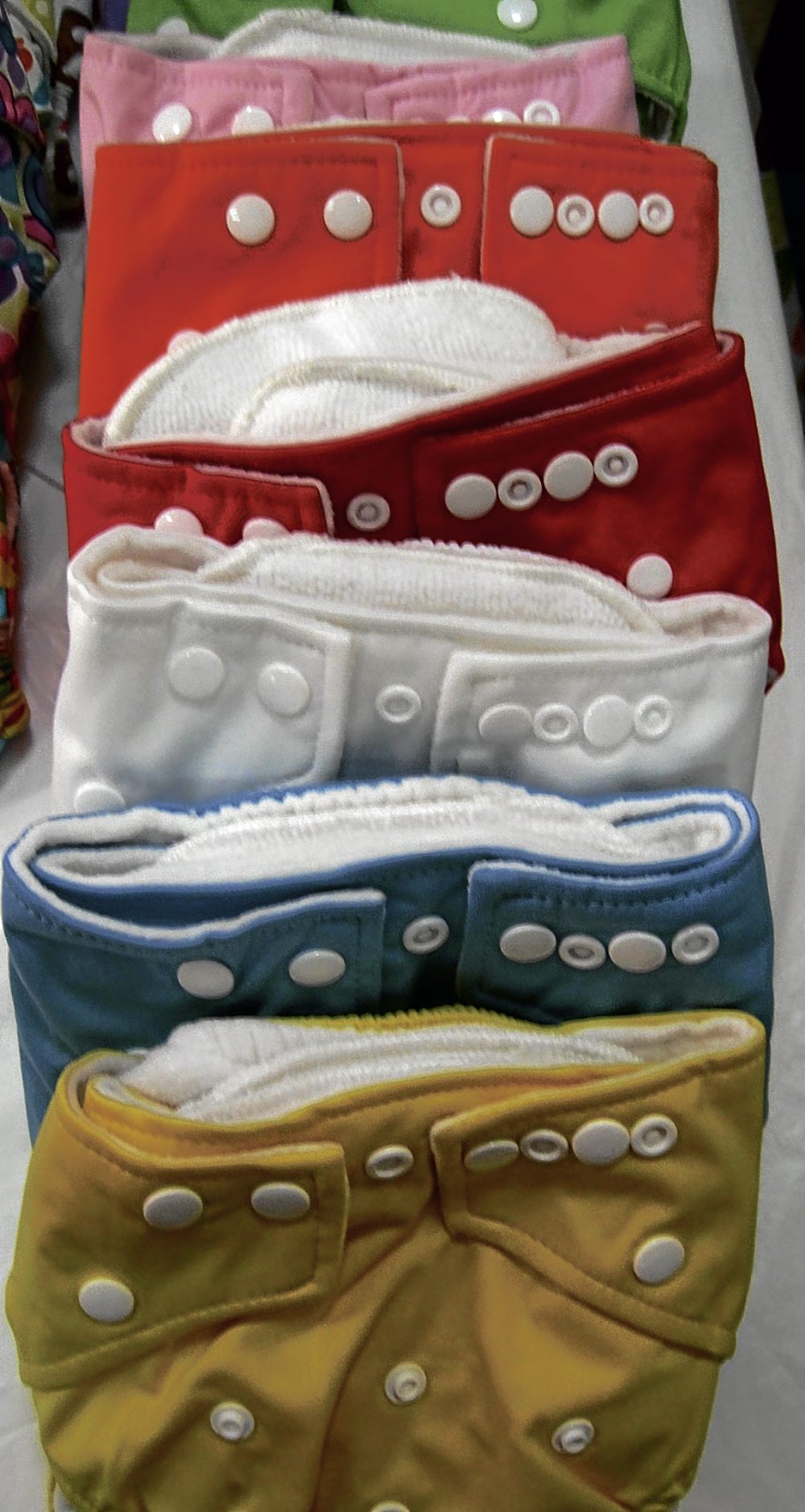
Modern cloth diapers in solid colors. PHOTOS BY ELIZABETH LOLARGA
At their seminar “Cloth Diapering 101” at the Medela House in New Manila, Quezon City, some mothers testified how they’ve been “100-percent cloth diapering their babies day and night.” It can even be done on out-of-town trips or family vacations, despite the added chore of washing and drying the diapers under the sun.
The savings are big. The variety of prints makes buying cloth diapers fun (almost addicting, in the case of Kimi Fernandez), and there’s the assurance of nothing toxic in them, especially for babies with sensitive skin. The diapers today not only come in plain or solid colors, but also in prints of rockets, butterflies, bears, alphabets, flowers and more.
Consumers have not been adequately warned that disposable diapers contain carcinogenic by-products like plastic, dioxin or a gel-like substance that expands and absorbs wetness also found in tampons but have been proven toxic. Then there are allergy triggers like fragrances.
Abie Co-Floreza, a partner of a cloth diaper online store called Tickled Moms, said, “We have to limit the toxic pollutants that reach our babies because the environment is polluted enough.”
Doing the math
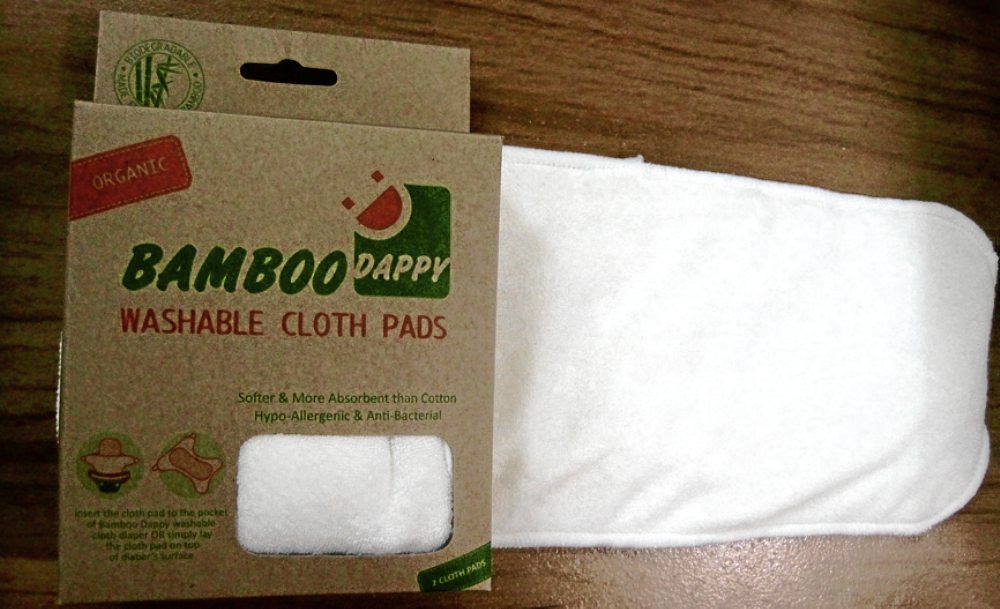
CLOTH inserts or pads that go inside the outer wet-proof panties
Tan and her co-mothers have done their math. If a mother buys a high-end disposable diaper or “dryper” at P8.50 each, she can spend up to P24,820 a year. A mom like Kimi, who lives in rainy Baguio, can claim exclusive cloth diaper usage at 24 pieces for baby Kai and does laundry every other day.
She said one must consider from six to eight nappy changes a day. She has invested P6,000 on these cloth diapers, one fourth the amount that could be spent yearly on disposable diapers. She is also assured that these diapers will last Kai until she is potty trained because “it’s one size fits most.”
Clarice Aviñante said it’s not enough to make the switch. The mother should learn how to “prep” a cloth diaper, depending on the material it’s made of. The waterproof outer layer needs one washing in cold water, then it’s ready for use.
Liners of bamboo cloth need washing in cold water of seven to nine times before they reach maximum absorbency.
She taught a “cheat” technique: wash the liners once, and have the baby wear it for shorter periods until the nappy hits its maximum absorbency.
The mom must ensure a snug fit by adjusting the waist and hip snaps to accommodate the baby’s leg and waist sizes. If the inserts are too long, they can be folded. Snugness means no spaces on the legs or back that can cause the urine to leak.
Change the diaper every two to three hours the way one does with disposables. Both outer cover and liner must be changed for hygiene purposes.
When to do laundry? Aviñante shared this formula: the number of diapers you need to have equals the diapers baby needs a day multiplied with the days when you plan to go between washes plus one.
If a baby uses up 12 diapers a day and you wash every other day, you’ll need a total of 36 cloth diapers.
In choosing a detergent for cloth diapers, ensure that it has no brighteners, no dyes, no fragrance, no softeners and no chlorine bleach. Separate covers or pockets from the soakers (inserts or liners). Put just one half of the usual amount of detergent. Rinse the diapers in cold water. Do it twice to ensure no detergent suds are left. Line dry horizontally so the elastics of the cover pants are not ruined.
Choosing cloth diapers needs determination. Aviñante said there are five pointers to make the choice work:
- Change your mind-set. Do not try to do it. DO IT.
- Invest.
- Do not buy disposable diapers.
- Educate people around you—your spouse, your parents, your yaya, your siblings.
- Deal with stressors one at a time. Mothers find themselves in stressful situations from the time she gives birth to caring for the newborn, breast-feeding, undergoing postpartum depression.
Modern cloth diapers remain the wiser choice, these women were one in saying. “Drypers” or disposables leave behind a huge carbon footprint when manufacturing, packaging, delivery to grocery shelves, marketing and sales are considered. These disposables also take from 100 to 500 years to decompose.
Tan and company wished their fellow mothers this: “May the cloth be with you!”
When in Cebu City, please visit http://gregmelep.com for your real estate and retirement needs. Avail of the opportunity to own a condominium unit in Cebu City for only P12,000.00/month with your own parking lot. Hurry while the supply of units last. Just call the Tel. Nos. shown below.
Subscribe to:
Posts (Atom)